
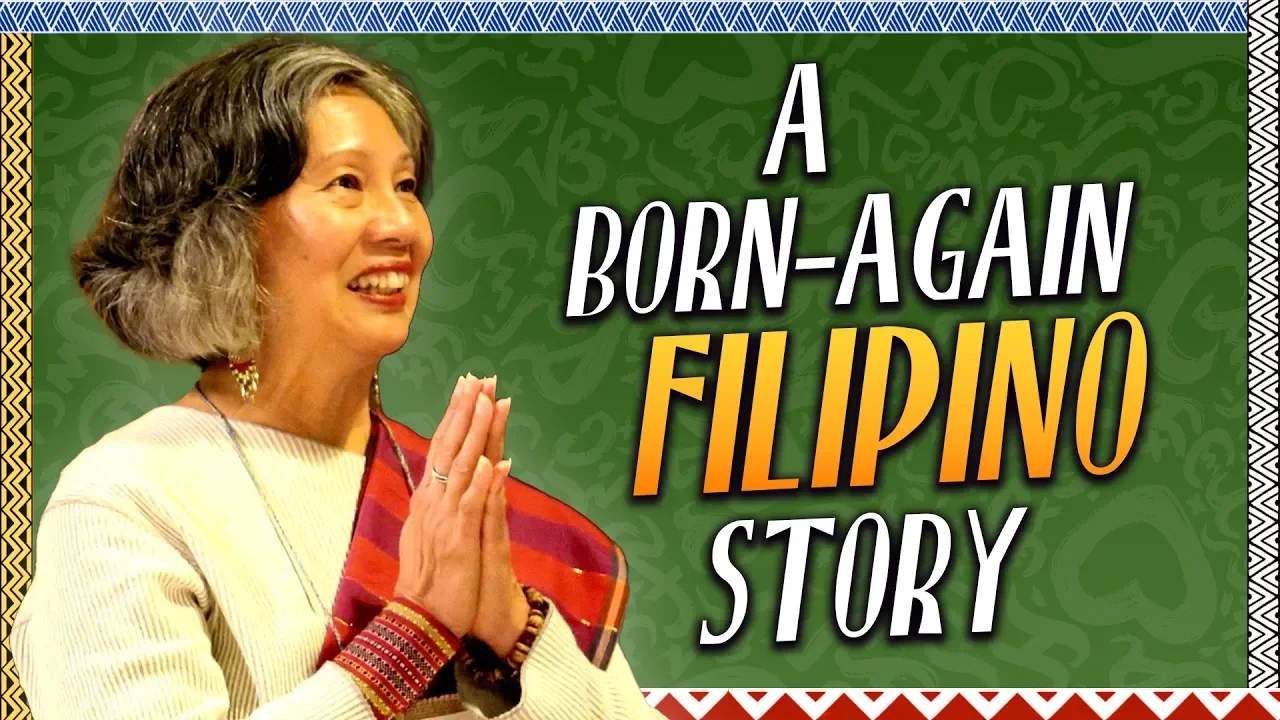
The Filipino Story: A Born-Again Filipino Story
Dr. Leny Strobel calls this awakening the “Born-Again Filipino” experience, a journey of rediscovering the identity, wisdom, and beauty within us that centuries of colonial history could never erase.
In this episode of Culture Bearers, Dr. Strobel shares her own journey home and reminds us of a beautiful possibility for Filipinos everywhere: To remember who we are. To reclaim what was forgotten. And to express our beauty. 🇵🇭
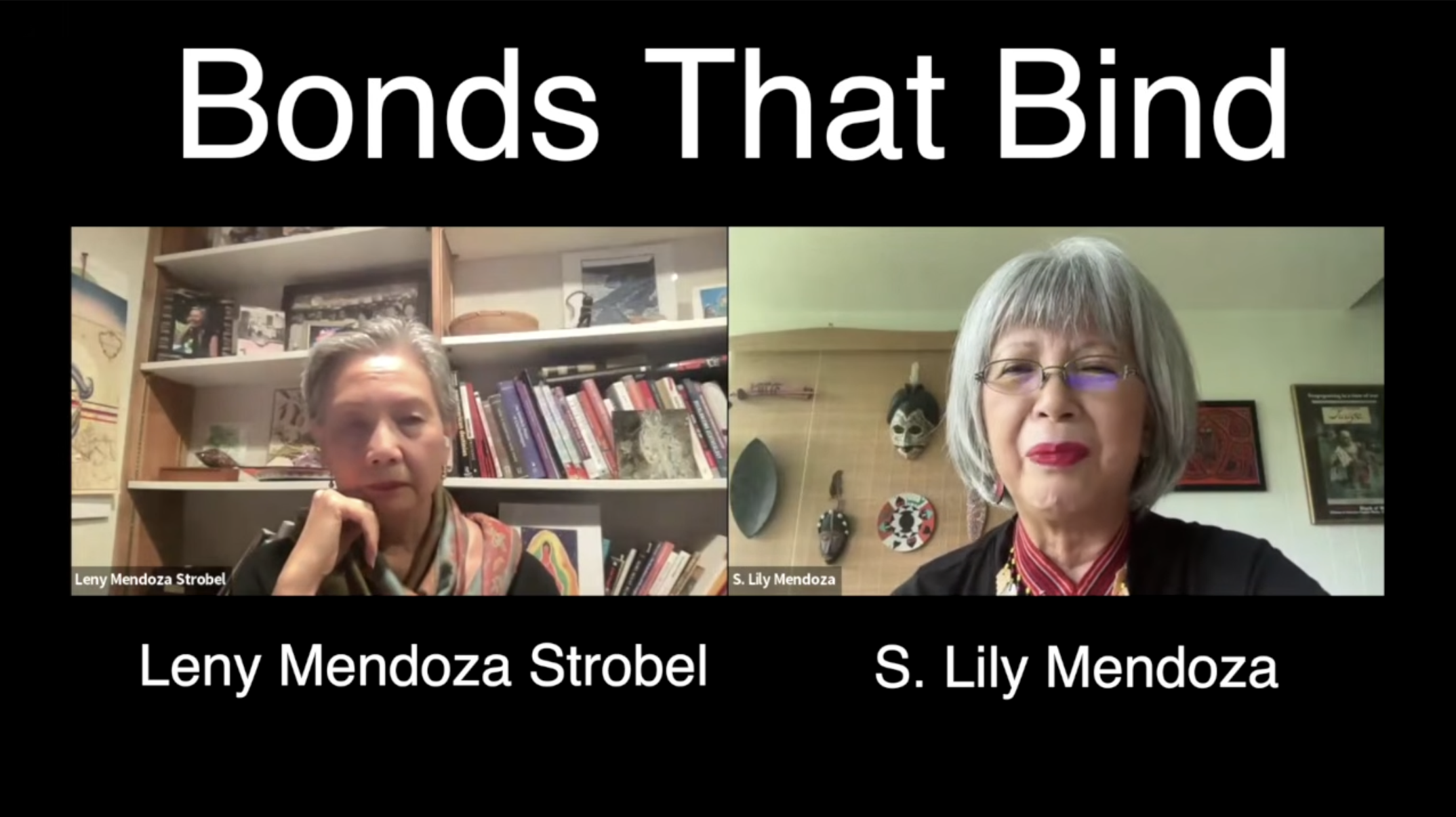
The Philosopher: Decolonizing the Self—Learning Land, Unlearning Empire
Leny Mendoza Strobel and S. Lily Mendoza reflect on their respective journeys from decolonial theory into Indigenous studies and practice. They explore how reclaiming Indigenous knowledge systems can transform understandings of self, community, and belonging.
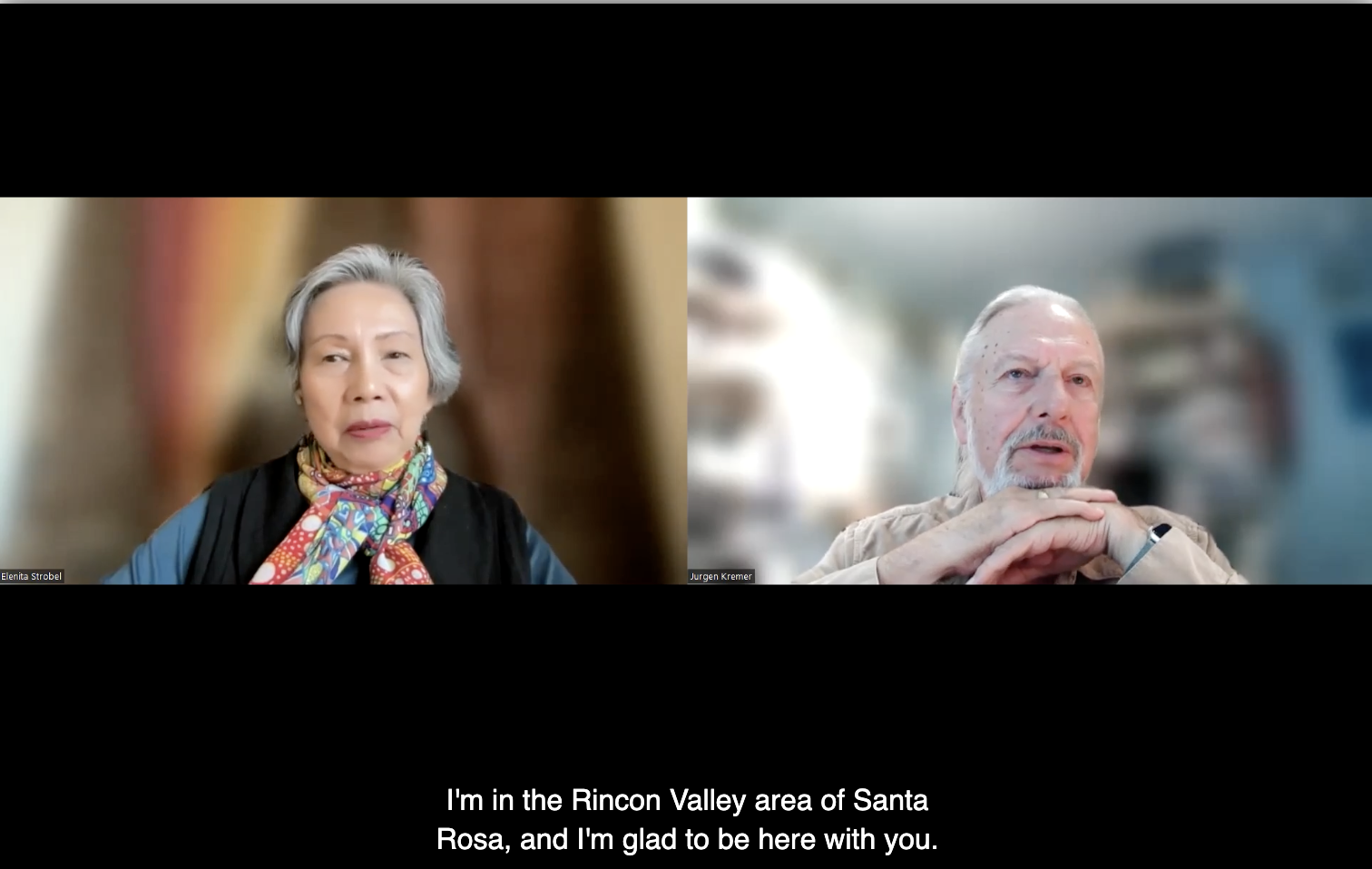
Guest Lecture in Jürgen Kremer’s PSYC7 Class: “Sikolohiyang Pilipino”
Featured guest lecture in Jürgen Kremer’s PSYC7: Theories of Personality, on the subject of Sikolohiyang Pilipino.
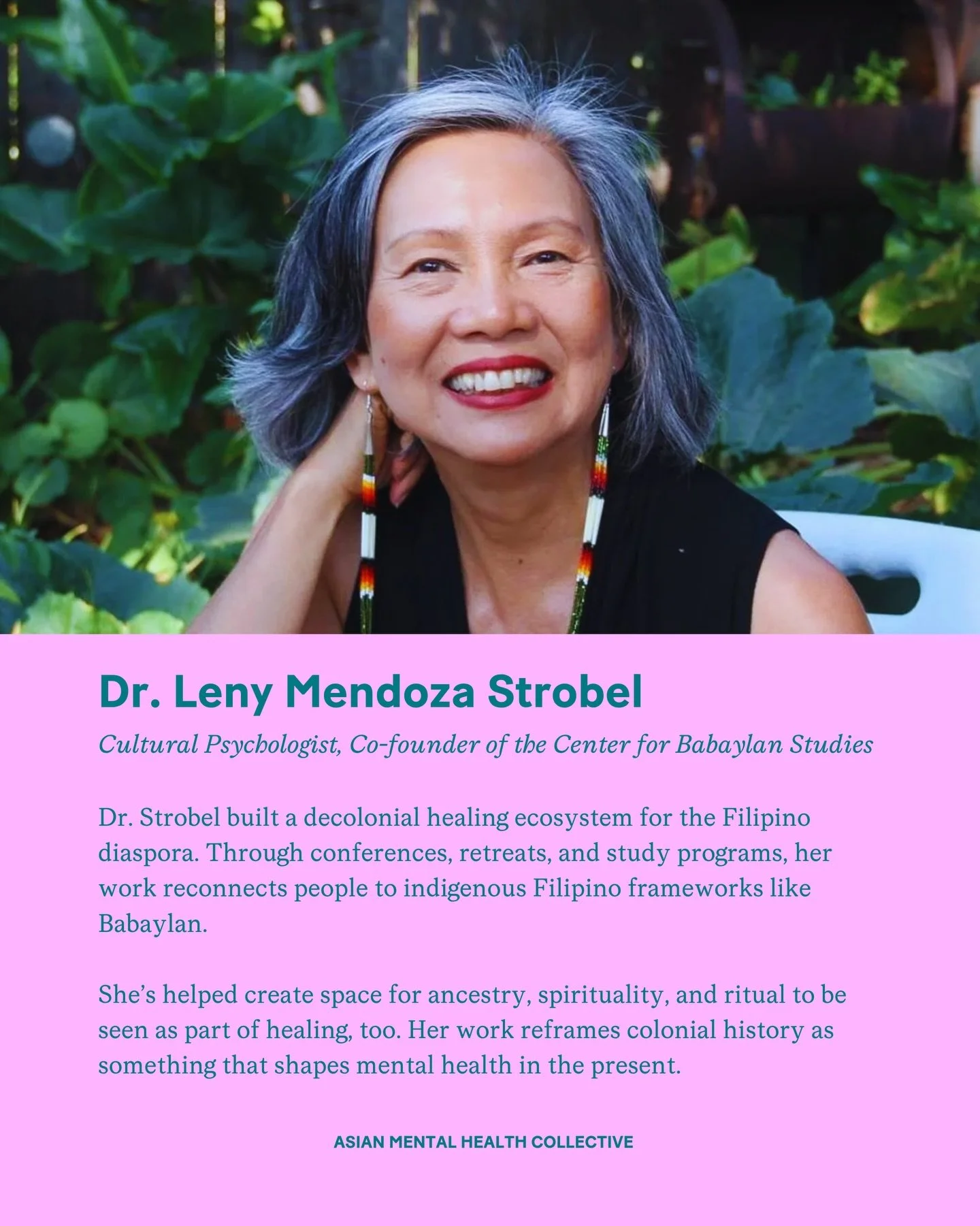
Feature by Asian Mental Health Collective for International Women’s Month
For International Women’s Month, Dr. Strobel was featured by Asian Mental Health Collective as an Asian woman shaping mental health in lasting ways.
As International Women’s Month comes to a close, we’re taking a moment to celebrate the Asian women who have shaped mental health in lasting ways.
Dr. Strobel built a decolonial healing ecosystem for the Filipino diaspora. Through conferences, retreats, and study programs, her work reconnects people to indigenous Filipino frameworks like Babaylan.
Pagsuyo: Courting the Indigenous Soul
The "Pagsuyo: Courting the Indigenous Soul" study circle brings together our Kapwa from across the diaspora for a monthly virtual gathering featuring teachings, presentations, and breakout discussions supported by peer facilitators…
In 2026, Pagsuyo will embark on a journey to re-membering Kapwa through the framework of "Ethnoautobiography."
Ate Leny writes: "Ethnoautobiography is a framework for getting to know our long body; this is a Haudenosaunee concept which is akin to the Filipino concept of kapwa."
The Ethnoautobiography book (developed by Jurgen W. Kremer and R Jackson-Paton) was “midwifed” by Ate Leny by lending her classes to pilot test the framework. Ate Leny, in recognizing that her own classroom pedagogy has been influenced by Filipino Indigenous Psychology, found in the Ethnoautobiography structure a useful tool that is capable of weaving the elements of our long bodies in a clear, gentle, and accessible way. She and Jurgen eventually team-taught an Ethnoautobiography course that became the basis for the published workbook suitable for both academic and non-academic community settings.
Registration for the 2026 Pagsuyo cohort is closed.
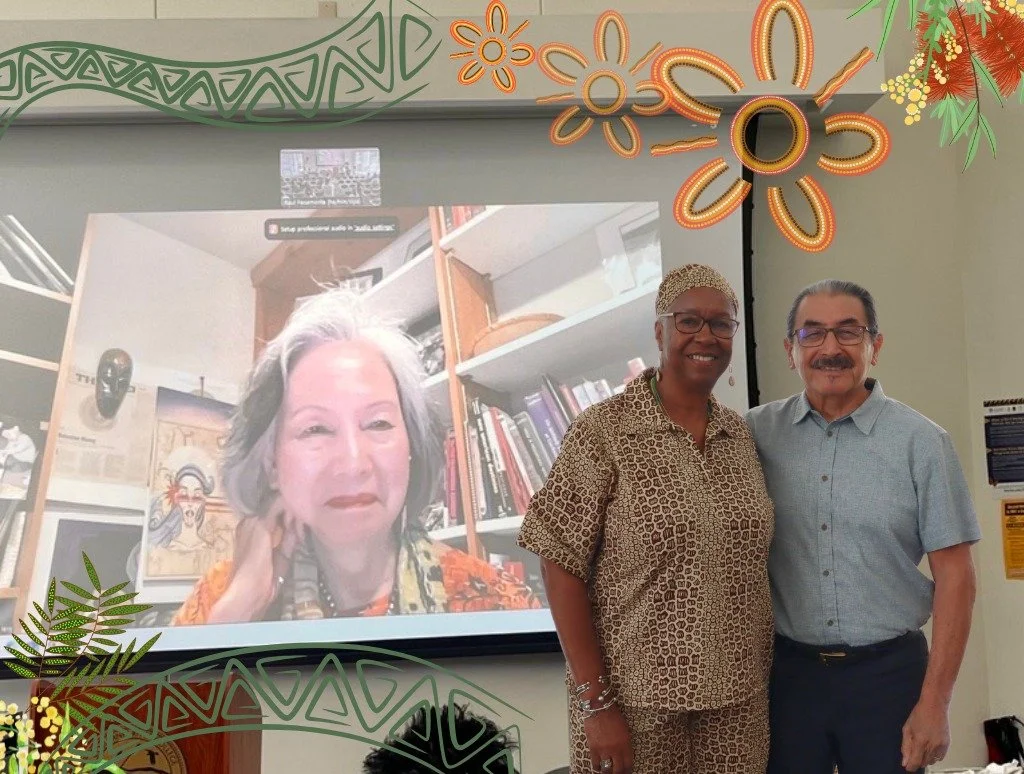
Indigenous People’s Day at Cosumnes River College
What traditions or practices from your heritage guide you today?
Feeding people! Kapampangan cooking. Cooking and Eating is Sacred. Food is Medicine. Food connects me to the Earth, to her soils, water, and all the beings living here..

Reclaiming our Original Motherline of Love: Book Study on Hilary Giovale’s Becoming a Good Relative
Dr. Leny Mendoza Strobel will join us February 20, Morgan Curtis will join us March 6, Hilary Giovale will join us March 20 and Grandmother Ejna Fleury will join us April 3.
We will get insights from our speakers on the provocative themes of this ground-breaking book and learn from their own life stories. We will have the opportunity to question the speakers and discuss our reactions in small groups and to share with the full group.
“Reading Hilary’s book is a refreshing deep dive into this challenging and wondrous path of healing and repair for white-identified folks... What is beautiful about Hilary’s book is her transparency in writing about the challenges of being on this path — the embodied aspects of the emotional, psychological, spiritual, physical, and cognitive aspects of unlearning whiteness.”
— Leny Mendoza Strobel

Future Ancestors: Navigating Decolonization and Embracing Ancestral Wisdom
In this episode, we had the honor of speaking with Dr. Leny Strobel, a pioneer in decolonization and re-indigenization. We explore her journey, the vital role of "Babaylan," and indigenous wisdom. Discover how Filipino Indigenous Knowledge brings positive change. Learn from Dr. Strobel's wisdom on bridging generations and reconnecting with heritage. She shares practical steps for decolonization. Plus, catch our rapid-fire segment for insights into her experiences.

Pinays without a Pause: Dr. Leny Strobel—Co-Founder, Writer, and Former Professor
It’s our season finale!! Rae and Bee chat with Dr. Leny Strobel on Babaylan Studies, community, and our ancestors.

Evolve Magazin: Der lange Körper
(Interview with Leny Mendoza Strobel in Evolve Magazin.)
Evolve: The process of decolonization has become your life's work. How did you come to the realization, how important is that for yourself, for the Filipino people, but also on a global scale?
Strobel: I was 30 years old when I married my husband and came to the US. I had a corporate career in Human Resources and basically a neocolonial education that was American-patterned. So, when I came here, I thought that my adjustment would be easy. But when I started encountering people's responses to me, I began to wonder why they would look at me and say: “How come you know how to speak English? Did he pick you out of a catalog?” I asked myself: don't they know anything about Filipino American history? And I realized that they didn't…
Esquire: 10 Filipino Female Authors to Read This Women's Month
Strobel explores the Philippines' glorious culture before the colonizers arrived. In pre-colonial Philippines, gender fluidity wasn't taboo and Babaylans were the epitome of glory.

Los Cien: Sonoma County Latino Leaders—Roots of Anti-Blackness/Roots of White Supremacy
Los Cien discussed the role of the Latinx community and the existence of anti-blackness in Sonoma County. This conversation was designed to make us feel uncomfortable and open our minds, to change entrenched mindsets that perpetuate racism and anti-blackness within our Latino community and beyond. We hope this topic inspires personal exploration and understanding of one's self and leads a stronger and more diverse movement of community champions and change agents who believe in equity building.

advaya Kinship Course: Decolonisation as Re-membering, Kapwa Psychology, and Wells of Liminality
In this conversation with advaya, Leny Strobel discusses diasporic identity formation; reconfiguring belonging in the context of empire, as a process of re-membering; how she draws from the well of liminal space; and more.
Leny speaks to us with and from her personal history and experience of being a Kapampangan from Central Luzon in the Philippines, and (currently) a settler on Wappo, Pomo, and Coast Miwok lands.
This conversation was held ahead of advaya's upcoming course KINSHIP, of which Leny is the opening speaker.

Bantula Conference 2022 Keynote: Towards an Ecology of Remembering—Decolonizing the Body, Memory, and Desire
Bantula Conference 2022
Keynote Address
Philippine Education-Based Conference
National Commission on Culture and the Arts
Philippines

Vogue: 10 Books On The Filipino Experience
There has been a growing awareness over the past few years not to neglect the rich history of our pre-colonial past. This increasing interest in our indigenous cultures is discussed in rich detail in the book Babaylan, edited by Leny Mendoza Strobel, which offers insight into beliefs around healing spirits, Kapwa psychology, and non-conforming gender.

500 Years of Christianity and the Global Filipin@: Reappropriation, Resistance, and Decolonization
The year 2021 marked the five-hundredth anniversary of Christianity’s entry into the Philippines. With over 90% in the country identifying as Christian and with more than eight million Filipin@s all over the world, Filipin@s are a significant force reshaping global Christianity. This anniversary thus not only calls for celebration but also reflection and critique.
This two-day conference gathered theologians in the Philippines, United States, Australia, and around the world to examine Christianity in the Philippines through a postcolonial theological lens. The “post” here is not used in the temporal sense, as if colonialism has ended, but rather, suggests the desire to go beyond the colonial in all its contemporary manifestations.
The second panel, “Reappropriation, Resistance, and Decolonization,” grappled with the enduring presence of coloniality in Filipin@ religious practices as well as celebrate the ways Christianity as a gift has been critically and creatively reimagined.

Noah’s Poem from 2015
the pool was filled with the footfalls of water spirits
as the day went on
the rose leaves inhabit the garden of secrets
devouring the souls of unseen children
quietly disappearing in the place of Time
accepting the inner freedom of people
past and present
neither day or night
can soothe the spirits
of the forgotten memories
turning into black emptiness
erases the people
you once remembered
(Note: Noah is Leny’s grandson.)

Jean Vengua Reviews Leny Mendoza Strobel's "Zen of Doodles" and "Glimpses"
A book review written by Jean Vengua of Glimpses and Zen of Doodles:
In 2016, Leny M. Strobel began using Zentangle to create drawings; some of these drawings went on the cover of her book, Glimpses: A Poetic Memoir (Through the MDR Generator) in 2019. Similar to how I’ve just been starting to focus on basic line and shape in my agimat drawings, she said she found it useful for “getting my mind out of my way.” Part of my own project is also to let the drawing tell me something, and to reduce my “plans” for any one drawing to a minimum.

Justin Jones: Black, Filipino, Civil Rights Activist
Justin Jones, a young Black and Filipino activist, reached out to me in late 2019, asking if I could help him lament the harm caused by anti-Black attitudes in the Filipino communities he grew up in. He wanted to embrace his pagka-Pilipino (Filipino-ness) as much as he embraced his Blackness. So, I introduced him to a few of the Black and Filipino scholars/culture-bearers in my circle, and I hosted a healing session on Zoom for him…

Green Dreamer Podcast: Finding Belonging and Remembering How to Dwell in Place
“You can use all the deconstructive theories, post-colonial, postmodern theorizing. But then there comes a time when your body begins to speak. What is your body saying? For me, that is when decolonization evolved into something that’s no longer metaphorical—something more real and material. ”
— DR. LENY STROBEL